

Atlanta technology companies have earned the city the nickname “Silicon Peach.” Several global Fortune 500 companies began in Atlanta, including some that most businesses use every day. These companies all use specific IT strategies to power their growth.
|
“Aligning IT management with proven best practices ensures organizations are not just reacting to change but actively driving growth and efficiency.” – Tony Rushin, Marketing Vice President at Network 1 Consulting |
If you want to give your SMB that kind of success, the rest of this article is for you. We will showcase some of the top tech companies in Atlanta and then explain which IT strategies you can use at your organization.
Who Are The Top Tech Companies in Atlanta, Georgia?
1. OneTrust
OneTrust provides software that helps organizations manage privacy, security, and data governance. The company focuses on what they call “Trust Intelligence,” which brings these areas together in one platform. Their tools help companies automate compliance tasks and manage growing regulatory requirements.
2. Calendly
Calendly offers an online scheduling platform that makes it easy for professionals to set up meetings without back-and-forth emails. The company started at Atlanta Tech Village and has grown into a global business with millions of users across many industries.
3. Flock Safety
Flock Safety builds camera systems and software that help law enforcement investigate crime. Their tools use AI to read license plates and send alerts when a vehicle linked to a case appears in the area. Flock Safety has also added audio detection and advanced video analytics, expanding its mix of hardware and software products.
4. Salesloft
Salesloft provides software that helps sales teams manage and improve their sales process. Their platform uses AI insights and automated workflows to help teams track conversations and move deals forward. The system brings email, phone, and social media activity into one place so teams can manage their pipeline more clearly.
5. Global Payments
Global Payments is a Fortune 500 company based in Atlanta. They provide technology such as point-of-sale systems and secure payment gateways. These systems help merchants and financial institutions process electronic transactions around the world.
Find Out Why 4,292+ End-Users Count on Network 1 Consulting
Which Atlanta Technology Companies Are Set to Grow?
1. Stord
Stord combines a physical warehouse network with software that coordinates operations. This setup allows brands to grow their fulfillment capacity without building and managing their own logistics infrastructure.
2. Hermeus
Hermeus is an aerospace company based in Atlanta that is developing Mach 5 hypersonic aircraft. The company focuses on building high-speed aircraft that can reduce travel time for commercial and defense use. Their Quarterhorse flight vehicle serves as a test platform for high-speed propulsion systems. These tests help the company refine the technology needed for future hypersonic aircraft.
3. Greenlight Financial
Greenlight Financial is a fintech company that offers a debit card and investment app for kids and teens. The platform helps young users learn money skills in a guided digital setting.
Parents can assign chores, set spending limits, and monitor activity through the app. Greenlight has expanded its services to include family insurance and credit-building tools, which have helped the company grow its user base.
4. Airia
Airia provides real-time monitoring and threat mitigation to help organizations secure AI applications as they move from pilot projects into full production. In late 2025, Airia announced a $100 million funding round, which shows strong investor support and a high likelihood for future growth.
5. Pull Logic
Pull Logic builds software that helps retailers and manufacturers manage inventory using AI. The platform focuses on improving pull-based inventory strategies, where supply responds directly to customer demand.
The platform helps businesses forecast demand more accurately and move products through the supply chain more efficiently. This approach reduces excess inventory and lowers the risk of products running out of stock.
|
Find Out What Else Your Atlanta Business Can Do to Enhance Your IT |
6 IT Strategies That Big Tech Companies in Atlanta Use
1. Zero-Trust Security Architecture
Modern tech companies no longer rely on simple firewalls to keep attackers out. They treat every login attempt as a possible risk, no matter where it comes from. They check each user and device every time someone tries to sign in. This process uses multi-factor authentication and real-time risk checks before giving access to specific data.
2. AI-Driven Signal-to-Action Workflows
Leading tech companies are replacing static dashboards with systems that guide employees on what to do next. These systems respond to real-time data instead of just showing reports. They use machine learning to track buyer activity or system performance. When certain patterns appear, the system creates clear recommendations or tasks for the team. This approach removes the need for manual data review before each decision.
3. Data-as-a-Product Governance
Top tech companies do not throw all their data into one large storage system where it becomes hard to manage. They treat data like a product, with clear owners who are responsible for its quality. They build clean, well-organized datasets that are ready for AI use. Teams document this data and make it easy to access through APIs so different departments can use it without confusion.
4. Cloud-First Infrastructure
Fast-growing tech companies avoid large, rigid software systems. They build modular systems in the cloud instead. They use Platform-as-a-Service (PaaS) tools to manage their applications. This setup lets them replace one feature or add a new one without rewriting all their code or running physical servers.
This model lowers infrastructure costs and helps the company adjust quickly when market needs change. See more advantages to using a cloud-first infrastructure below.
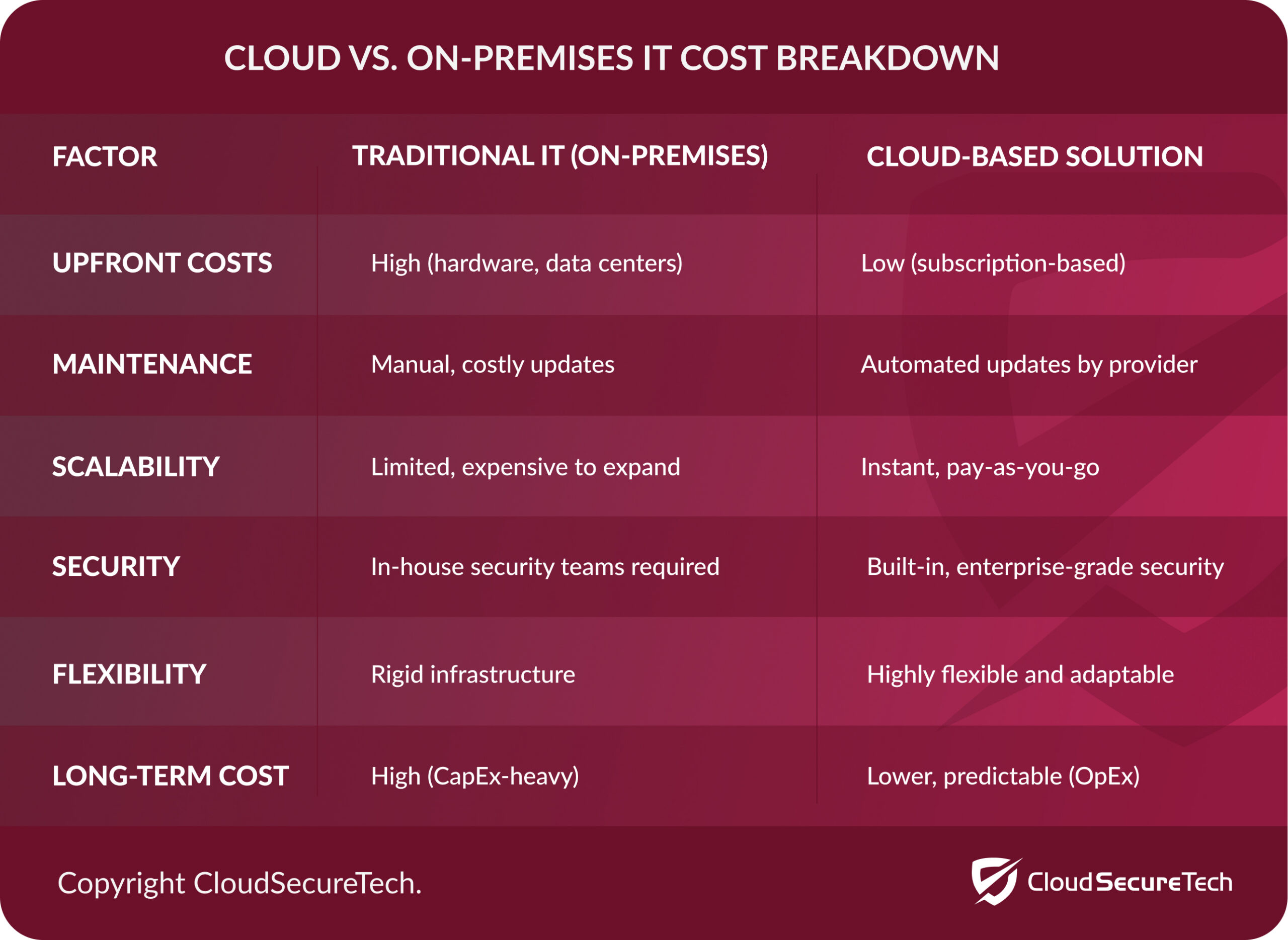 Source: CloudSecureTech
5. Continuous Observability & Resilience
High-performance tech companies use monitoring tools that do more than check if a system is online. They track how each part of the system works with the others. They monitor traces and performance metrics in real time. This helps them find slow points or unusual activity before it disrupts service.
They also design systems that can handle problems on their own. If hardware fails or traffic suddenly increases, the platform can recover automatically without waiting for manual action.
6. Agentic AI
Tech leaders are using agentic AI, which means autonomous digital assistants that can complete full tasks on their own. These systems handle multi-step processes such as customer onboarding or vendor reviews from start to finish.
Unlike basic chatbots, these agents move between different software tools to gather information and carry out actions. They do not need someone to guide each step of the process. This approach helps companies operate with smaller teams.
How You Can Implement The Same Strategies As The Largest Tech Companies in Atlanta
|
Zero-Trust Security Architecture |
|
|
AI-Driven Signal-to-Action Workflows |
|
|
Data-as-a-Product Governance |
|
|
Cloud-First Infrastructure |
|
|
Continuous Observability & Resilience |
|
|
Agentic AI |
|
Start Leveraging The Key IT Strategies of Large Atlanta Tech Companies Today
Whether you manage a technology company or not, it should be no secret that the top tech companies in Atlanta know how to make their IT. These tips can help you enhance your IT strategy, but you will still need the resources to make it happen.
That’s how Network 1 Consulting can help. We are an Atlanta-based managed services provider that can help you meet your long and short-term IT goals. Count on our team for expert:
-
and more!
Contact us today to get started!